

Advanced Multi-Shaft Mixer Systems for High-Viscosity Industrial Manufacturing
In industrial processing, achieving uniform mixing across complex formulations directly impacts product performance, process efficiency, and scalability.
Fluid Mixing Technologies delivers engineered industrial multi-shaft mixing systems designed for high-viscosity materials, slurry preparation, and precision dispersion processes.
Our solutions are widely adopted by manufacturers across Pune, PCMC, Chakan, Talegaon, and key industrial regions of Maharashtra seeking reliable process mixing equipment.
Request a process consultationWhat Is a Multi-Shaft Mixer and Why Do Industries Use It?
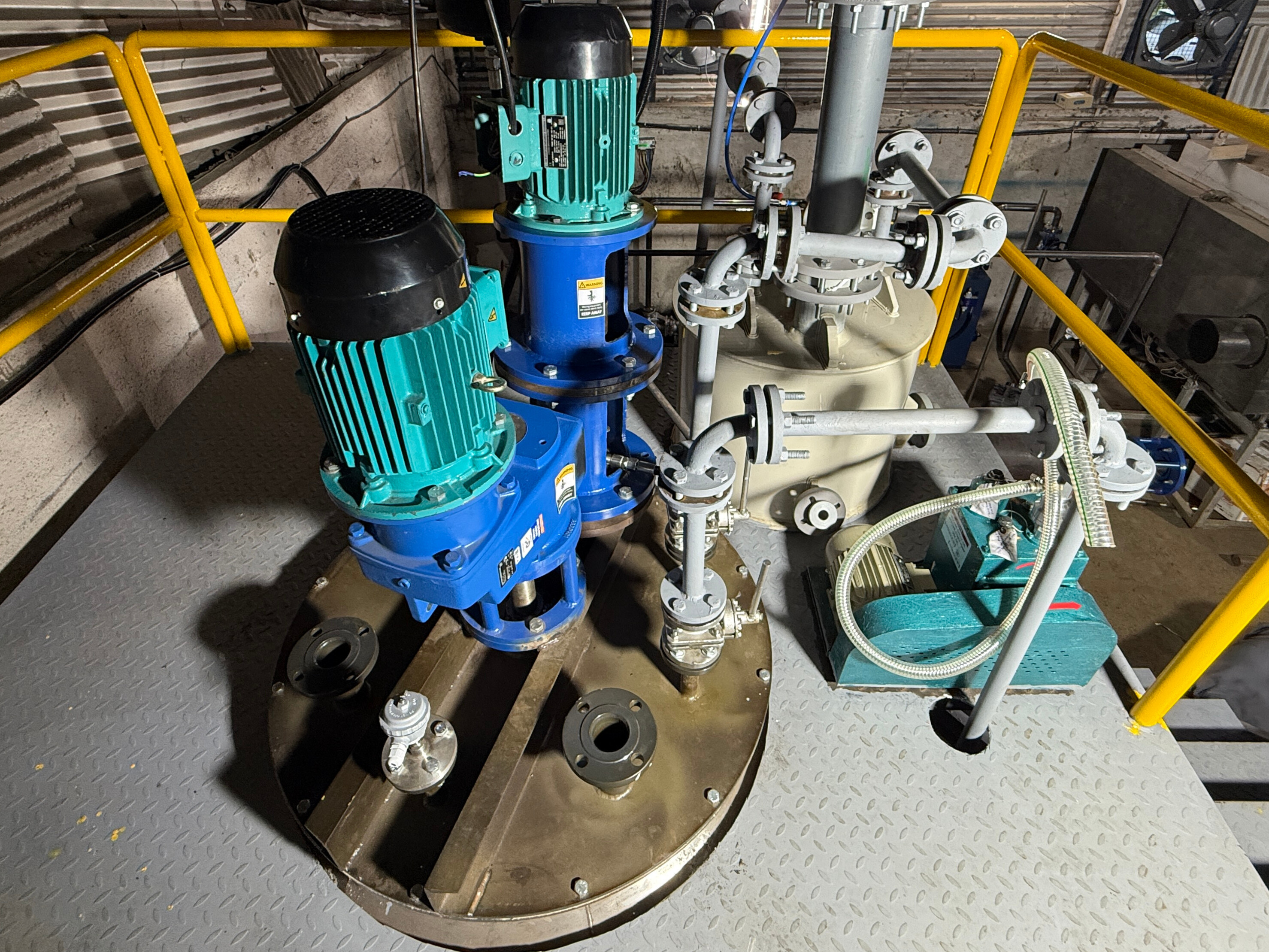
A multi-shaft mixer is a specialised industrial mixing system that integrates multiple independently driven shafts, each performing a distinct mixing function.
Typical configurations include:
- High-speed dispersers for particle breakdown
- Anchor agitators for bulk movement and wall scraping
- Auxiliary impellers for flow enhancement
These systems are essential when handling:
- High-viscosity or non-Newtonian materials
- Multi-phase formulations requiring particle wetting
- Powder-liquid dispersion challenges
- Scale-up from lab to industrial production
They are widely used as high-viscosity mixers, industrial dispersion mixers, and slurry mixers in demanding process environments.
What are the Key Benefits of Multi-Shaft Mixing Technology in Industrial Processing?
The following are the key benefits of Multi-Shaft mixing technology in industrial processing:
Operational Advantages
- Efficient handling of high-viscosity and thixotropic materials
- Faster dispersion and improved particle wetting
- Reduced batch cycle time
- Consistent and repeatable product quality
Process Engineering Advantages
- Independent shaft control for shear rate optimisation
- Improved slurry homogenisation
- Reduced need for multiple processing stages
- Scalable for industrial production
What are the Different Industries That Use Multi-Shaft Mixers?
The following are the industries that use multi-shaft mixers:
Fertilisers and Agrochemicals
Used for suspension fertilisers and agrochemical blending, ensuring uniform distribution of active ingredients and preventing settling.
Oil and Gas
Applied in drilling fluid mixing and additive blending, where rheological consistency is critical for field performance.
Adhesives and Sealants
Supports polymer blending, filler dispersion, and viscosity control while eliminating air entrapment.
Paint and Coatings
Used for pigment dispersion, resin mixing, and viscosity control to ensure colour consistency and coating stability.
Water and Wastewater Treatment
Ensures proper mixing of coagulants and flocculants for improved treatment efficiency.
Plastics and Polymers
Enables uniform blending of additives and resins for consistent downstream processing.
Electric Vehicles (EVs) and Batteries
Critical for battery slurry preparation, ensuring uniform dispersion of conductive materials and binders.
How Multi-Shaft Mixing Systems Work
Multi-shaft systems operate through coordinated mixing actions:
High-Speed Disperser → Particle Size Reduction and Dispersion
Breaks down particles and distributes powders evenly into liquids. This helps achieve uniform dispersion and prevents clumping during the mixing process.
Anchor Agitator → Movement of High-Viscosity Materials
Moves thick or viscous materials along the tank walls, ensuring the entire batch circulates properly and preventing material buildup.
Impellers → Improved Flow and Circulation
Create a steady flow within the vessel, improving overall circulation so ingredients mix consistently throughout the batch.
Mixing Mechanisms
Shear Mixing
Applies strong mechanical force to break apart particles or droplets, improving dispersion and consistency.
Convective Mixing
Moves materials from one part of the vessel to another, ensuring the entire batch blends evenly.
Dispersive Mixing
Separates agglomerated particles and distributes them uniformly within the formulation.
This ensures efficient homogenisation across complex formulations.
Types of Multi-Shaft Mixers Used in Industrial Manufacturing
Dual Shaft Mixers
Suitable for medium to high-viscosity applications requiring dispersion and bulk mixing.
Triple Shaft Mixers
Offer enhanced shear control and flow management for complex formulations.
Planetary Multi-Shaft Systems
Designed for extremely high-viscosity and paste-like materials.
Real Industrial Mixing Use Cases and Process Workflows
High-Viscosity Adhesive Manufacturing Process
A typical adhesive production workflow using a multi-shaft mixer includes:
- Raw material is charged into the mixing vessel
- Polymer and resin addition under controlled agitation
- Filler incorporation using high-speed dispersion
- Viscosity build-up phase managed by anchor agitator
- Final homogenisation for consistent texture and performance
This process ensures:
- Proper particle wetting
- Controlled shear application
- Uniform viscosity development
Such workflows highlight the importance of coordinated mixing actions in industrial production.
Who Needs a Multi-Shaft Mixer in Their Production Line?
These systems are ideal for manufacturers dealing with:
- High-viscosity formulations
- Multi-component mixing systems
- Inconsistent batch quality
- Long processing cycles
- Scale-up challenges
They are widely used in industrial dispersion and slurry mixing applications requiring precision and repeatability.
Customised Multi-Shaft Mixing Systems in Pune
Fluid Mixing Technologies offers customised multi-shaft mixing systems in Pune tailored to specific process requirements.
As one of the trusted Multi Shaft Mixer manufacturers & suppliers in Pune, India, we design systems based on:
- Material rheology
- Batch size and production capacity
- Shear requirements
- Industry-specific standards
We also collaborate with industrial multi-shaft mixer suppliers in Pune to deliver reliable solutions across Maharashtra.
Technical Specifications of Industrial Multi-Shaft Mixers
Typical specifications include:
- Batch Capacity: 50 litres to 10,000+ litres
- Viscosity Handling: Up to several lakh cP
- Motor Power: 5 HP to 200+ HP
- Speed Range:
- Disperser: up to 1500 RPM
- Anchor: 10–100 RPM
- Vessel Design: Jacketed, vacuum-enabled, or pressure-rated
Performance Outcomes of Multi-Shaft Mixing Systems
Implementing a well-designed system results in measurable improvements:
- 40–60% reduction in mixing time
- Improved dispersion uniformity
- Reduced batch rejection rates
- Better rheological control
- Lower energy consumption through process optimisation
These outcomes directly improve productivity and product consistency.
Engineering and Manufacturing Capabilities
Fluid Mixing Technologies combines engineering expertise with advanced manufacturing:
- Precision-fabricated mixing vessels
- Heavy-duty gear drive systems
- Variable Frequency Drive (VFD) control
- Industrial-grade shafts and agitators
- Custom-built systems for specialised applications
Why Choose Fluid Mixing Technologies
Fluid Mixing Technologies is a trusted multi-shaft mixer manufacturer in India known for delivering process-driven solutions.
Key Strengths
- Expertise in industrial mixing systems and agitators
- Custom-designed equipment for complex processes
- Durable construction for heavy-duty use
- Proven performance across industries
- Strong presence as a multi-shaft mixer manufacturer in Pune
These systems can also be integrated with high shear mixers, vacuum mixing systems, and other industrial equipment.
How to Select the Right Multi-Shaft Mixer for Your Process
Key Considerations
- Material viscosity and rheology
- Desired dispersion quality
- Batch size and throughput
- Thermal sensitivity
- Required shear rate
Engineering Factors
- Shaft configuration
- Motor power and torque
- Vessel design
- Automation and controls
Multi-shaft mixers can handle materials from low-viscosity liquids to extremely high-viscosity pastes exceeding several lakh centipoise.
Dual shaft mixers provide dispersion and bulk mixing, while triple shaft systems offer enhanced control over shear and flow for complex formulations.
A multi-shaft mixer is ideal when both dispersion and bulk mixing are required simultaneously, especially in high-viscosity systems.
Yes, they are widely used for slurry mixing to ensure uniform particle distribution and stable suspensions.
Request Engineering Consultation
If your process involves high-viscosity materials, dispersion challenges, or inconsistent batch output, our engineering team can help.
✔ Speak Directly with Our Mixing Experts
Our engineers analyse your formulation, viscosity profile, and production requirements to recommend the optimal system.
Partner with Fluid Mixing Technologies to optimise your industrial mixing performance.